





What does koinonia mean?
Koinonia, pronounced koi-no-KNEE-ah—accent on the third syllable, is a Greek word that appears in its different forms about 20 times in the New Testament. Usually, it is translated as “fellowship.” Acts 2:42, the first place the word occurs in the Bible, says of the early Christians:
“And they continued steadfastly in the apostles’ doctrine and fellowship [koinonia], in the breaking of bread, and in prayers.”
But in the New Testament, koinonia means a much deeper and more intimate fellowship than just associating with and enjoying the company of other Christians.
Examples of the word koinonia in the New Testament
Paul uses koinonia throughout his letters to describe the close relationship Christians have with:
- Jesus (1 Corinthians 1:9)
- The gospel (Philippians 1:3-5)
- The Holy Spirit (Philippians 2:1)
- The sufferings of Jesus (Philippians 3:10), etc.
And the apostle John wrote: “That which we have seen and heard we declare to you, that you also may have fellowship [koinonia] with us; and truly our fellowship [koinonia] is with the Father and with His Son Jesus Christ” (1 John 1:3).
But koinonia is translated in other ways as well. Because it comes from a root word that means “partner” or “companion,” it has in it the idea of “sharing”—sharing possessions, sharing experiences, sharing life, sharing one’s self with another.
That’s why Paul used koinonia to describe the offerings given by the Christians in Corinth. He called them a “liberal sharing [koinonias]” (2 Corinthians 9:13). When an offering was taken to help the suffering Christians in Jerusalem, the believers in Philippi contributed generously. They felt a close connection with their brothers and sisters in Christ, whom they had never met. That is koinonia.
Koinonia in the early Christian Church
But perhaps the text that best describes what koinonia meant to those early Christians in Paul’s day doesn’t use the word at all. Paul wrote:
“As many of you as were baptized into Christ have put on Christ. There is neither Jew nor Greek, there is neither slave nor free, there is neither male nor female; for you are all one in Christ Jesus” (Galatians 3:27, 28, emphasis supplied. See also Colossians 3:11).
Being “in Christ” was an essential concept for Paul (see Romans 8:1; 2 Corinthians 5:17; Ephesians 2:13; Philippians 1:1; Colossians 1:2). For him, being “in Christ” meant being united with Him in a saving relationship that outweighed any other consideration. Being “in Christ” created a relationship with Him that did away with all distinctions and divisions among people. Being one “in Christ” makes us all one with each other.
It could be argued that society in the first century was more divided than today with all our modern problems. Jews and Gentiles, slaves and free, men and women, Greeks and “barbarians”—all these had their separate and distinct places in society.
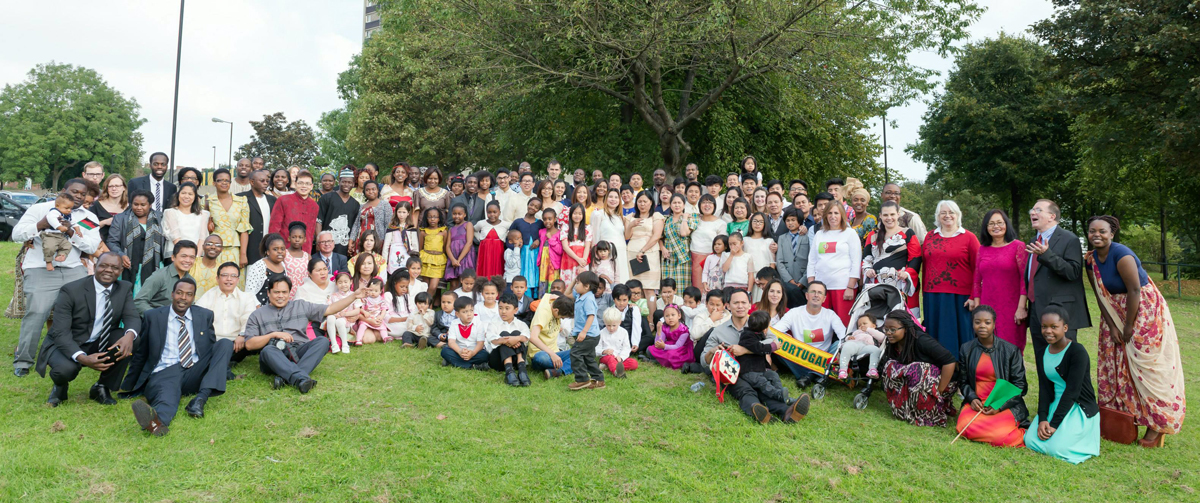
Jews and Gentiles distrusted each other and had as little to do with each other as possible. Men mattered more than women; masters ruled over their slaves. But “in Christ,” all these distinctions disappeared. Instead of divisions, there was koinonia, a close intimate relationship of fellowship, sharing, oneness, and love.
What koinonia means for us today
Unfortunately, that close, intimate fellowship of the early Christian church didn’t last long. The old divisions tended to creep back in. But the ideal was there—and it is still the ideal for us today. God still calls us to koinonia—a fellowship with Him that makes us all one “in Christ” and does away with the differences that divide us. John expressed it in these words:
“If we walk in the light as He is in the light, we have fellowship [koinonia] with one another, and the blood of Jesus Christ His Son cleanses us from all sin (1 John 1:7).
